
A secure patient transport operator replaced a subscription platform it had outgrown
We built a control-room dispatch panel and an offline crew tablet app. Now every trip, status change and handover is in one system the client owns and can change.
One of the UK's leading secure patient transport operators
The client moves people in mental health crisis between homes, police custody, hospitals and places of safety, 24 hours a day. Its crews work across the country, and a central control room plans and follows every journey.
Each trip carries clinical and legal risk. The control room has to know which crew is closest, what state the patient is in, and who took responsibility at every handover.
Run non-emergency medical transport? The workflow is the same: booking, dispatch, a crew app, a signed handover and reporting.
A rented tool that couldn't keep up with the operation
The control room ran on a subscription MVP. Bug fixes took weeks and feature requests went nowhere, so the team filled the gaps with phone calls, spreadsheets and paper.
No single picture of a trip
Bookings, crews, vehicles and reasons for a call lived in different places. Reports existed, but not the ones clients asked for, so the team adjusted them or filled the gaps by hand, about two days a month.
Live data with no signal
Crews often lose mobile coverage on the road. Status updates and handover signatures had to survive hours offline and sync without overwriting what the control room changed in the meantime.
Replace it without stopping
The control room works around the clock. The new system had to go live while the old one stayed on, with no day of downtime and no week lost to retraining.
Cost of waiting: around $3,000 a month in per-vehicle fees for a tool the team kept working around, and no way to add the safety features the client needed.
Discovery first, then a working slice every two weeks
Discovery
Sat with the control room, mapped every step of a trip and the data each step needs.
Design
Clickable prototypes of the panel and the tablet app, tested with dispatchers and crews.
Core build
Bookings, crews and live statuses first, demoed every two weeks.
Pilot and switch
A 2–3 month pilot on two bases, then the whole company moved over.
Long-term partnership
Status reminders, safe destinations and e-signatures added after launch.
One system for the control room and every crew
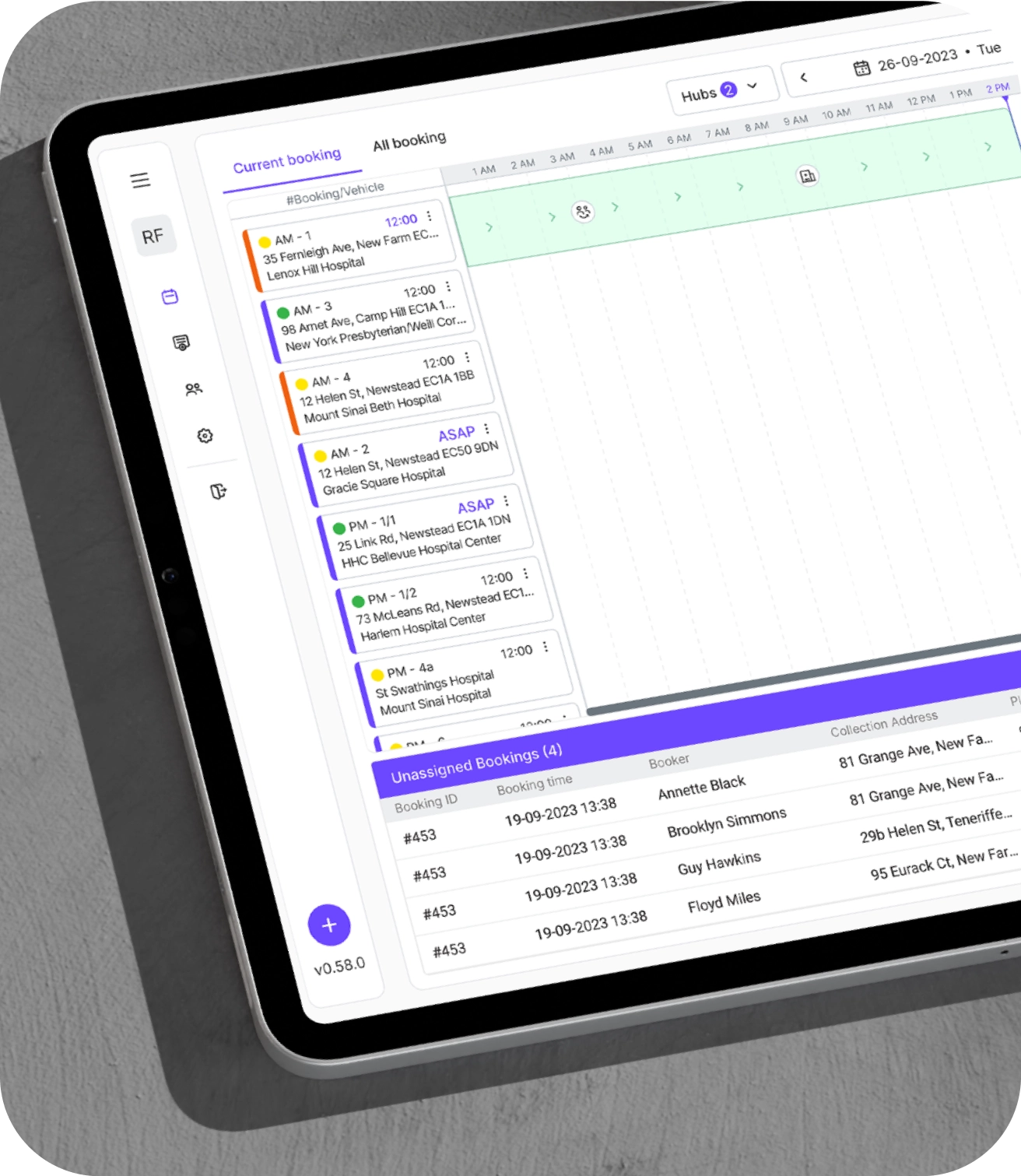
A web panel for dispatchers and a tablet app for crews, on one real-time backend. Each part below closes one of the three challenges.
Every trip in one control-room panel
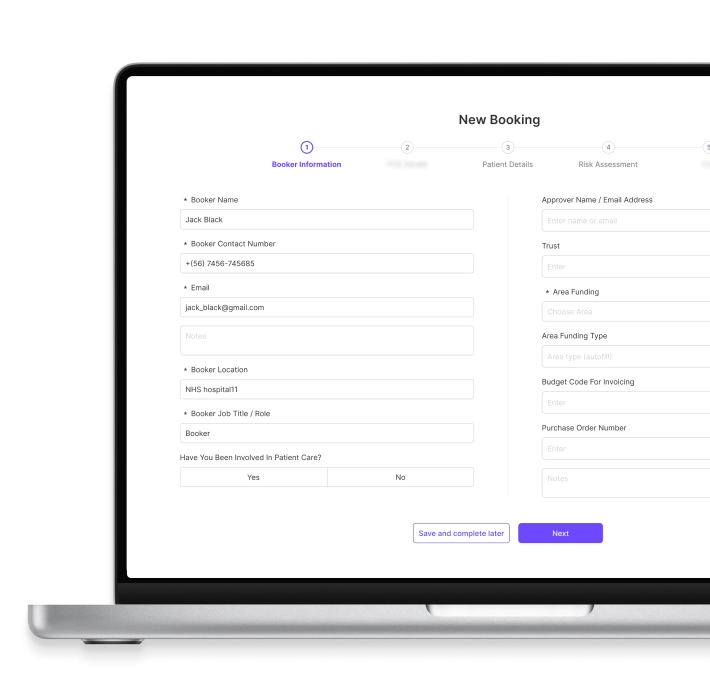
Dispatchers create a booking with the caller, the patient's location, safety requirements and the reason for the call. They pick a crew and a vehicle, and the crew gets the job on the tablet at once. Bookings can be immediate or scheduled.
- Crews, staff, vehicles and hubs in one directory
- Live status of every active job
- Reports for clients exported to PDF or Excel in one click
A secure crew app that works offline
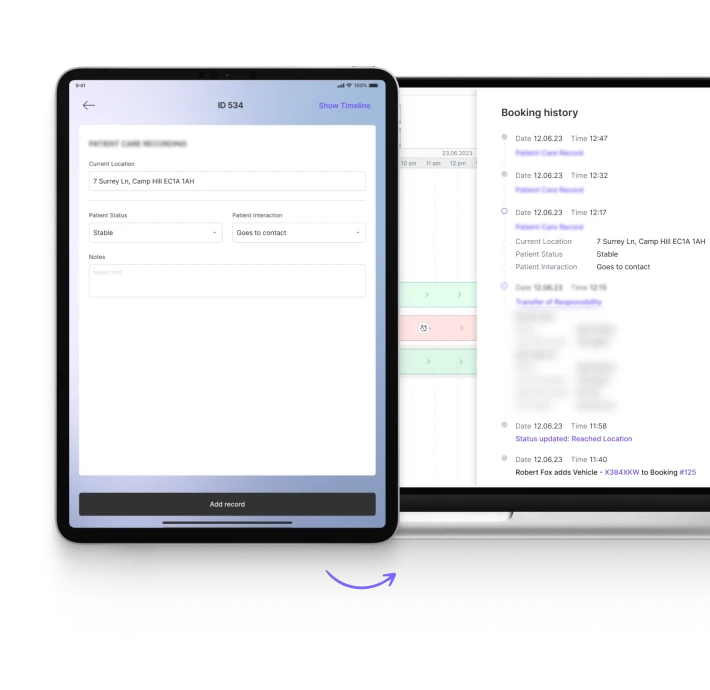
The tablet holds patient data, so every sign-in is protected with two-factor authentication. Crews update the job and the patient's condition with or without signal. Each change is saved on the device and joins a sync queue. When coverage returns, the queue syncs with the database without overwriting what the control room changed in the meantime.
- Four job statuses, with a reminder every 30 minutes
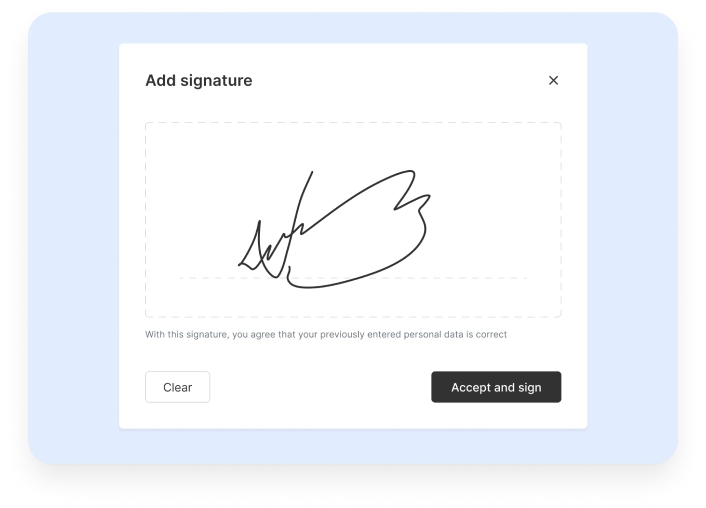
- E-signature at every handover: crew to crew and crew to hospital
- Request backup from the nearest hub

Switched over without a day of downtime
The new system ran next to the old one during a 2–3 month pilot on two bases. Once it held up there, the whole company moved over, with no day of downtime.
- Training for the control room and crews before each base moved over
- A mistake-proof UX: one clear flow for each task, so steps are hard to skip or get wrong
- Demo of working software every two weeks
What changed after go-live
| Metric | Before | After |
|---|---|---|
| Software cost | ~$3,000 a month in per-vehicle fees | Own system, no licence fees |
| Call to crew assigned | ~25 min | ~15 min |
| Status updates | Phone calls to the crew | Live on screen, reminder every 30 min |
| Handover | Paper form | E-signature stored with the trip |
| Client reports | ~2 days of manual work a month | PDF / Excel export in one click |
| New features | Weeks of waiting, often never | Added by the client's request |
Want numbers like these for your operation? Tell us what your dispatch tool can't do today.
Features in daily use
Booking and dispatch
Immediate or scheduled bookings, crew and vehicle assignment, instant notification.
Crew and fleet directory
Staff, vehicles and hubs, with roles and access control.
Offline crew tablet app
Job cards, patient condition updates, backup requests.
Status and reminders
Four job statuses, reminder every 30 minutes if nothing changes.
Safe destinations
A registry of hospitals and places of safety for patients who need extra care.
Handover and reports
E-signature at every handover, crew to crew and crew to hospital. PDF and Excel exports.
What it runs on

A print and fulfilment group raised warehouse productivity by 30% without replacing its old system

A Japanese carrier cut delivery wait times by 34% and sold its driver app to other carriers
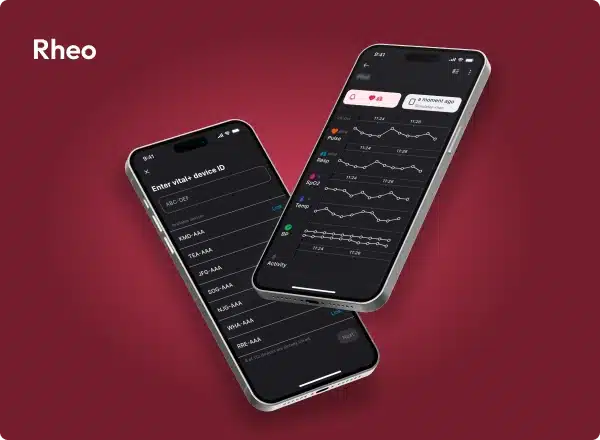
Rheo clinicians follow patients' vital signs live, in hospital and at home, with 99.99% uptime
years solving real-world tech challenges
products shipped and scaling
countries where our clients run and grow their products




Project inquiries
hello@bytecrab.comPhone number
+38 095 537 6119